Category: Religious Architecture > Convent
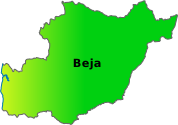
District: Beja > Barrancos > Santo Aleixo da Restauração
The Convent of Tomina stands in an isolated valley within the Herdade da Contenda, near Santo Aleixo da Restauração, in the municipality of Barrancos. Nestled between hills covered in scrub and holm oaks, the building dominates the tranquil landscape by the Ribeiro de Pai Joanes, right on the border with Spain. Access is difficult and requires traversing dirt tracks, but the surrounding view is worth any effort: an immense green and rugged expanse, typical of deep Alentejo, where silence seems to suspend time.
The area is integrated into the Contenda Natural Reserve, a territory of great ecological value, included in the Natura 2000 Network. The preserved natural environment and the sense of isolation lend the convent an almost mysterious character, reinforced by its imposing ruins.
The convent was founded in 1686 by Manuel de Jesus Maria, with the support of the local population, especially from Santo Aleixo da Restauração. To erect the building, it was necessary to destroy part of the existing rock face, a collective effort that is still remembered today. A few years later, the convent received an image of Nossa Senhora das Necessidades, offered by D. Isabel Xara, from Moura. The image quickly gained a reputation for being miraculous and became the spiritual center of the community.
In 1709, by decision of King D. João V, the Convent of Tomina became the property of the Order of the Camillians, whose main mission was to care for the sick and the dying. From this place, friars departed to found other convents in various regions of the country. A curious episode in its history involves King D. Pedro II, who once ordered the destruction of the convent but retreated after the intervention of the population. As a gesture of reconciliation, the monarch offered the community a valuable set of liturgical vestments made in China, in white and red damask.
Despite its advanced state of ruin, the Convent of Tomina retains an impressive presence. The schist and brick walls, partially covered by vegetation, reveal the simple and robust style of 17th-century Alentejo religious architecture. The main structure still preserves perfect semicircular arches, open voids, and vestiges of the old bell tower, with its unique dome crowned by pinnacles.
Inside, the collapsed divisions and broken vaults hint at the former layout of the conventual spaces. Natural light penetrates through the openings, highlighting the warm tones of the stones and bricks. Nature has taken over the building, creating an almost dreamlike setting where history and time seem to blend.
Visiting the Convent of Tomina is entering a space where the past can still be felt in the stones and the silence. The solitude of the place and the contrast between the ruins and the landscape create a sense of peace, but also of mystery. Many visitors describe the site as "disturbing" due to its grandeur and abandonment, and at the same time "serene," due to its harmony with the natural environment.
More than a historical vestige, the Convent of Tomina is a testament to the devotion and resilience of the people of Alentejo. Even in ruins, it continues to be a symbolic and emotional reference point, preserving the memory of centuries of faith and border life.
Coordinates DD: 38.07384688105445,-7.0465177357969
Coordinates DMS: 38°04'25.8"N 07°02'47.5"W
 Weather Santo Aleixo da Restauração



 On-duty Pharmacy Santo Aleixo da Restauração