Category: Culture and Entertainment > Museum
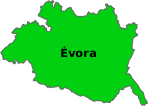
District: Évora > Évora > São Bento do Mato
The hermitage is located in São Bento do Mato, in an isolated spot in the municipality of Évora, surrounded by open fields that reinforce the secluded character of the place. The rural setting creates a sense of distance from daily life, typical of former hermitage areas.
It sits on a small hill, a position that gives it some presence in the landscape. The walled enclosure and the wide courtyard preceding the temple allow one to perceive the former welcoming function for the pilgrims who flocked here over the centuries.
The history of the site dates back to the time of the cenobites linked to the Order of Mount Carmel, who are believed to have erected a small clay niche here before the mid-eighteenth century. Devotion intensified with an episode associated with the unexpected cure of a woman who prayed before the image that existed at the time, a fact that quickly attracted people from various localities.
The construction of the current hermitage began in 1757, at the initiative of the Archbishop of Évora, D. Miguel de Távora, supported by offerings from the faithful. The following year, the temple was consecrated and became one of the most sought-after pilgrimage centers in the region, a tradition that remained alive for much of the following century.
The building has an octagonal plan, a frequent shape in pilgrimage sanctuaries. The entrance, marked by a marble portal topped by a large window, leads to an interior completely covered in polychrome stucco, where Rococo-style altarpieces in gilded wood carving stand out.
The walls house one of the temple's most striking elements: about fifteen hundred ex-votos, some dating back to 1754. These are testimonies left by those who attributed graces received to the intercession of Our Lady of Carmel, including personal objects, photographs, small wax figures, and dedications.
The large courtyard surrounding the hermitage was once bordered by several single-story or two-story buildings, intended to accommodate the hermit responsible for the chapel and the numerous visitors. These spaces, built between the late eighteenth and early nineteenth centuries, preserve architectural elements characteristic of the period, such as arches, vaults, and old carpentry.
Over the years, the hermitage continued to be associated with expressions of popular devotion, including accounts of episodes considered miraculous. Among these, the so-called "miracle of the snake" stands out, whose skin, according to tradition, remains displayed inside the temple.
The Hermitage of Our Lady of Carmel remains linked to the religious and community identity of the region. Annual celebrations, such as the liturgical feast in July and the tribute on June 10th held by former combatants, reinforce the continuity of this connection.
The complex is classified as a Site of Municipal Interest, a recognition that underscores the historical, architectural, and devotional value of the location, as well as the role it played in the life of neighboring communities over several centuries.
Coordinates DD: 38.714295130552074,-7.763382615058734
Coordinates DMS: 38°42'51.5"N 07°45'48.2"W
 Weather São Bento do Mato



 On-duty Pharmacy São Bento do Mato