Category: Religious Architecture > Church
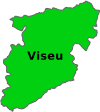
District: Viseu > Castro Daire > Carvalhosa > Picão e Ermida
The Carvalhosa Chapel is located in a plateau area, in the locality of Carvalhosa, municipality of Castro Daire, next to an important road junction connecting Gralheira and Rossão. This location, situated in the Picão and Ermida area, offers a landscape of wide horizons and an airy environment, characteristic of the highlands.
Its strategic position, at the top of the water lines that flow towards Rossão and Carvalhosa itself, makes it a reference point and a traditional meeting point in the region.
The chapel features solid construction and a robust appearance, based on a quadrangular plan. It was erected in granite, a material abundant in the region, and its pyramid roof gives it a distinctive silhouette in the surrounding landscape. On the lintel of the main door, facing east, there is an inscribed date that points to the year 1807, revealing its antiquity.
The simplicity and durability of the materials used highlight its integration into the rural mountain environment, bearing witness to centuries of history and devotion.
The history of the Carvalhosa Chapel is intrinsically linked to an ancient cross that once stood at the same crossroads. Near the chapel, there is still a stone that, according to its remnants, served as the base for that original cross. On this stone, an inscription dated 1742 suggests that the cross preceded the chapel's construction, giving its name to the entire site.
The presence of crosses at crossroads in these communities had multiple meanings, from recording significant events to inviting prayer for the deceased or, in earlier times, warding off popular superstitions, marking the place as a point of passage and spirituality.
Beyond its historical and architectural relevance, the area around the chapel is also a stage for traditions. It is here that, annually, on the first Sunday of July, a fair is held that attracts livestock and shepherds, revived after a long period of interruption. This event highlights the deep connection between man and nature and animals, particularly with cattle, through moments like the "chega de bois" (arrival of the bulls).
This fair reflects the community spirit and the heritage of ancient mountain fairs and pilgrimages, which were meeting and trading points, but also places for sharing and preserving secular customs.
Coordinates DD: 40.9641728,-7.9538625
Coordinates DMS: 40°57'51.0"N 07°57'13.9"W
 Weather Carvalhosa



 On-duty Pharmacy Carvalhosa