Category: Military Architecture > Tower
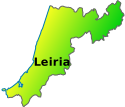
District: Leiria > Óbidos > Óbidos
The Albarrã Tower is located in the village of Óbidos, in the district of Leiria, next to the Church of São Tiago do Castelo and close to the highest point of the walls. It rises in an area of narrow, cobbled streets, surrounded by whitewashed houses, with blue details and flowerpots that lend it a picturesque and welcoming atmosphere. From its base, it is possible to see part of the walls and a panoramic view over the houses inside the walled village.
The Albarrã Tower is one of the oldest and most symbolic elements of Óbidos' fortified complex. Built on medieval structures, its origin dates back to the period when the castle and walls were erected to reinforce the village's defense. The name “Albarrã” derives from the Arabic term that designated towers advanced relative to the main wall, used for surveillance and protection.
Despite its military appearance, this tower primarily served civil functions. It served as the first Town Hall, treasury house, and jail. In the 16th century, during the reign of D. João III, it began to host Mathematics and Theology classes, demonstrating the building's importance in the administrative and cultural life of the village.
Over the centuries, the Albarrã Tower underwent several changes. In the 19th century, in 1842, a belfry with a clock was added to it, earning it the popular designation of Clock Tower. This structure remained until the 1940s when it was demolished during restoration and requalification works of the historical complex.
The building reflects different architectural influences, combining Romanesque, Gothic, Manueline, and Baroque elements. Its robustness and verticality stand out among the surrounding constructions, forming a visual link between the old castle and the urban fabric of the village.
Integrated into the medieval landscape of Óbidos, the Albarrã Tower appears as an imposing stone landmark, partially covered by vegetation that climbs its walls and contrasts with the light colors of the neighboring houses. The proximity to the walls and narrow streets creates a scene of great authenticity, preserving the historical atmosphere of the village.
The location is particularly appreciated by those who walk along the walls or explore the old town, offering a unique perspective on the urban and defensive evolution of Óbidos throughout the centuries.
Classified as a National Monument since 1910, the Albarrã Tower represents a testament to the adaptation of medieval structures to the civil and administrative needs of the community. Its historical and architectural value contributes to the unique character of the fortified complex of Óbidos, where centuries of history, art, and collective memory intersect.
More than a simple defensive vestige, the tower symbolizes the vitality of a village that has known how to preserve its past without losing the charm and authenticity that distinguish it.
Coordinates DD: 39.36307338466853,-9.15746864392696
Coordinates DMS: 39°21'47.1"N 09°09'26.9"W
 Weather Óbidos



 On-duty Pharmacy Óbidos