Category: Nature > Woodland
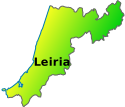
District: Leiria > Alcobaça > Vimeiro
The Vimeiro National Forest covers a vast forested area in the parish of Vimeiro, municipality of Alcobaça. It extends over gentle hills where continuous patches of pine forest and other native species predominate, creating a broad and silent natural environment.
The surrounding area maintains a distinctly rural character marked by cultivated fields and small agricultural units. The transition between the humanized landscape and the forest is gradual, allowing one to perceive how this territory has been shaped over the centuries.
The Forest belonged for a long time to the Monastery of Alcobaça, forming part of the ancient Coutos (protected lands) where the monks developed agricultural and forestry activities. After the extinction of religious orders in 1835, it passed into State administration, currently being managed by the Institute for Nature Conservation and Forests.
Among the figures associated with the study of this territory, Joaquim Vieira Natividade stands out; between the 1930s and 1950s, he used the forest as an area for forestry research, contributing to the knowledge of the cork oak, eucalyptus, and soil management practices.
The forest area covers about 267 hectares, dominated by Pinus pinaster (maritime pine), which occupies most of the surface. Eucalyptus and cork oak also appear in different clusters, joined by a significant patch of Portuguese oak covering approximately twenty hectares, one of the most striking elements of the landscape.
In the shrub layer, strawberry trees, heaths, and broom are common, while the undergrowth presents aromatic herbs and a large variety of mushrooms. The fauna includes species such as the red squirrel, booted eagle, jay, and wild boar, frequently associated with areas of higher tree density.
The forest complex is traversed by dirt tracks that reveal different environments along the route, from darker areas to clearings where herbaceous species predominate. The presence of old structures linked to forest management, such as the former Ranger's House (Casa do Guarda), recalls the productive and protective function of this space over time.
The existence of a marked walking trail allows for an oriented exploration of the forest, highlighting the diversity of species, the tranquility of the area, and the relationship between vegetation, relief, and seasonal watercourses. It is a space easily appreciated by those seeking direct contact with a forest landscape characteristic of the central coastal region.
Coordinates DD: 39.48951210714863,-9.035782055083274
Coordinates DMS: 39°29'22.2"N 09°02'8.8"W
 Weather Vimeiro




 On-duty Pharmacy Vimeiro