Category: Nature > Beach
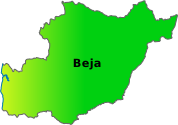
District: Beja > Odemira > Vila Nova de Milfontes
Situated in Vila Nova de Milfontes, in the municipality of Odemira, Praia do Patacho stretches along a rocky cove framed by low cliffs and dune areas. From the top, one can see a mosaic of dark slabs, tide pools, and small sandy pockets that change shape according to the state of the sea.
The setting is markedly natural. Outcrops of schist and rolled pebbles predominate, with coastal vegetation on the slopes. The landscape is wide and open to the Atlantic, with an excellent horizon for late afternoons and soft light for photography.
The terrain alternates between rock and sand, creating platforms where natural pools form at low tide. The contrast between the dark tones of the rock and the blue of the ocean gives the beach a rugged and photogenic character. In some sections, there are coverings of seaweed, especially after storms, which can alter the appearance of the sandy area.
Access to the base of the cove is via paths on the sandy slope and steeper taluses. The ground is uneven and slippery in wet areas, which is why it is common to see walkers with sturdy footwear exploring the space. There is no lifeguard surveillance, and the experience is mainly one of contact with a minimally intervened natural environment.
The sea is exposed and has variable swell. The tide dictates almost everything: at high tide, the water covers most of the slabs and the outline of the cove becomes more limited for walking. At low tide, extensive platforms, small sandy beaches, and transparent pools are revealed. The wind can blow intensely, typical of this coast, although there are calm periods near the cliff indentations.
In the center of the beach remain the vestiges of a small vessel, locally known as Klemens, which ran aground in the nineteen-nineties. The metal remains are very degraded and continue to lose material due to the action of the sea, but they retain testimonial value and serve as a photographic subject. Nearby, there is a wastewater treatment plant, whose presence is visible in the landscape. Extra caution is recommended on descents, with children, and on wet rock, and checking the tides before planning a visit.
Coordinates DD: 37.72583114444128,-8.792972183913722
Coordinates DMS: 37°43'33.0"N 08°47'34.7"W
 Weather Vila Nova de Milfontes




 On-duty Pharmacy Vila Nova de Milfontes